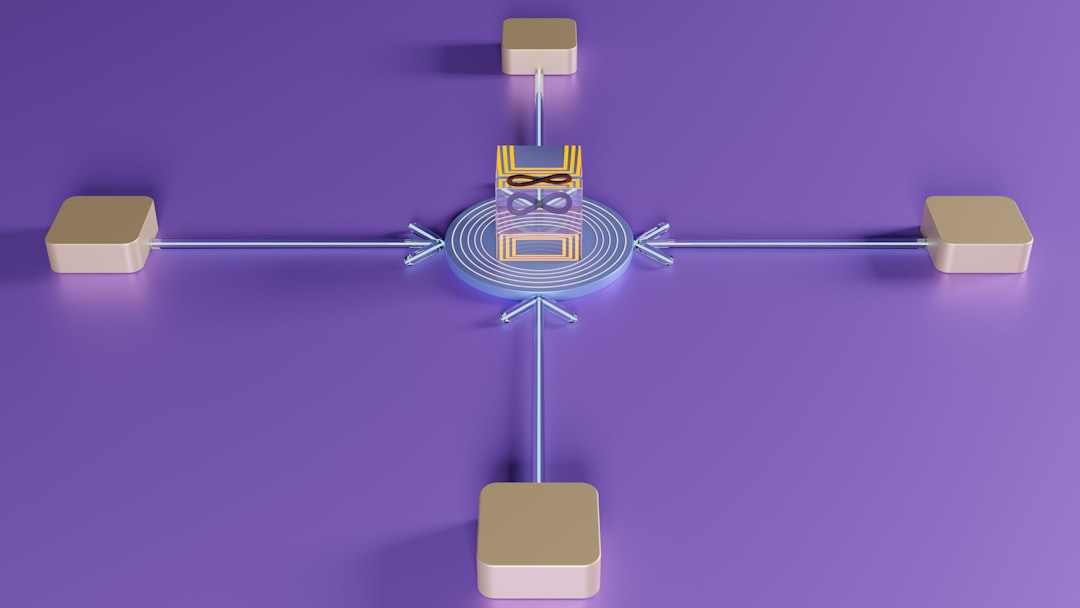
Modern API Design for AI: Statelessness, Loose Coupling, and Unified Integration
Explore how RESTful best practices, stateless architecture, and unified credit systems transform fragmented AI integrations into scalable, production-grade infrastructure.
Building a modern AI feature rarely means calling a single endpoint anymore. A typical production workflow now requires text generation for reasoning, image synthesis for UI assets, OCR for document intake, and voice interfaces for accessibility. Stitching these together usually means managing three different SDKs, four authentication flows, inconsistent rate limits, and a billing matrix that breaks at month-end. The result is integration sprawl: brittle glue code, unpredictable latency, and engineering cycles consumed by plumbing rather than product logic. What if you could ship multimodal AI without maintaining a patchwork of disparate services?
The AI landscape has shifted from experimental single-model proofs-of-concept to production-grade, multi-capability applications. This transition exposes a hard truth: AI workloads demand the same architectural rigor as databases, authentication providers, and payment gateways. Yet many teams still treat AI APIs as black-box utilities, ignoring foundational web design principles. Statelessness, uniform interfaces, predictable URI schemes, and standardized HTTP status codes are not legacy constraints; they are the only proven path to horizontal scalability, fault tolerance, and maintainable codebases. When inference requests spike unpredictably, a stateful or tightly coupled design becomes a bottleneck. Loose coupling allows clients and AI services to evolve independently, meaning you can swap out underlying foundation models without breaking client contracts. Furthermore, consistent naming conventions and clear resource representation reduce cognitive load for developers and enable automated tooling, caching, and observability. In short, treating AI APIs with RESTful discipline is no longer optional—it is the difference between shipping a reliable product and firefighting integration debt.
Stateless Architecture & The AI Inference Bottleneck

Decoupling Client State from Model Routing
Statelessness is the cornerstone of scalable web APIs, but its importance multiplies in AI systems where inference compute is expensive and non-deterministic. A truly stateless API requires every request to carry all necessary context: authentication, parameters, and payload data. The server never retains temporary session state between calls, enabling load balancers to route requests to any available inference node. This design eliminates server affinity, simplifies horizontal scaling, and guarantees that a sudden traffic spike doesn’t collapse a monolithic session store.
However, AI workflows often feel stateful. Conversational memory, streaming tokens, and long-running agents suggest persistent connections. The architectural solution is to externalize state to the client or a dedicated knowledge layer, keeping the inference endpoint stateless. The API returns hypermedia links or structured tokens that the client uses to resume or branch workflows. Below is a comparison of how state management impacts AI API scalability:
| Design Pattern | Scaling Behavior | Failure Recovery | AI Workload Fit |
|---|---|---|---|
| Stateful Session | Vertical scaling only; node affinity required | High risk; lost context on disconnect | Poor for streaming & multi-model routing |
| Client-Managed State | Horizontally scalable; stateless inference nodes | Resilient; replayable via tokens/links | Ideal for chat, RAG, and async agents |
| Hybrid (Stateless API + External KB) | Unbounded scaling; compute decoupled from memory | Graceful degradation; retry-safe | Optimal for production AI pipelines |
By enforcing a stateless request model, teams gain the ability to roll out new models, adjust temperature, or redirect traffic across regions without touching client code. The uniform interface principle ensures that clients only need to understand standard HTTP verbs and resource representations, not the underlying inference orchestration.
Resource-Centric URIs & Predictable Contracts
Naming, Verbs, and OpenAI Compatibility
RESTful APIs are organized around resources, not actions. URIs should represent nouns, while HTTP methods define operations. In AI, this means avoiding endpoints like /generate-text or /parse-document and instead structuring them as resource collections: /chat/completions, /embeddings, /documents. This aligns with RFC 3986 and ensures that clients can predict behavior based on standard HTTP semantics: GET retrieves representations, POST creates or triggers inference, and DELETE cleans up cached knowledge bases.
Platform independence emerges when APIs stick to widely adopted data formats like JSON and provide clear, machine-readable schemas. When an API is OpenAI-compatible, it achieves maximum interoperability. Developers can point existing SDKs at a new base URL and instantly gain access to unified capabilities without rewriting integration layers. Here is how that drop-in pattern looks in practice:
from openai import OpenAI

# Point the SDK to a unified AI gateway
client = OpenAI(
    base_url="https://kizunax.io/api/v1",
    api_key="kx_YOUR_API_KEY"
)

# Standard chat completion call works unchanged
response = client.chat.completions.create(
    model="gpt-4o-mini",
    messages=[{"role": "user", "content": "Summarize the attached PDF."}]
)
print(response.choices[0].message.content)
The contract remains stable even as backend models evolve. Clients interact with a uniform interface, while the provider routes to the most cost-effective or capable model under the hood. This loose coupling dramatically reduces vendor lock-in risk and accelerates iteration cycles.
Billing, SLAs & The Economics of API Design
Token Economics & Predictable Reliability
AI APIs introduce unique economic constraints. Unlike traditional REST endpoints where bandwidth and compute scale linearly, AI inference costs scale with token volume, context window size, and modality. A fragmented billing model forces teams to track multiple rate limits, reconcile disparate invoices, and guess capacity. A unified credit or token system solves this by abstracting modality-specific pricing into a single consumption metric. Teams can monitor burn rate, set hard budgets, and allocate tokens across text, vision, voice, and RAG workflows from one dashboard.
Reliability in AI infrastructure is not just about uptime; it is about predictable cost, graceful degradation under load, and clear failure semantics. A 99.9% SLA means nothing if token exhaustion silently breaks core features.
Standard HTTP status codes must be used consistently to communicate AI-specific states: 200 OK for successful completions, 429 Too Many Requests when rate limits or credit caps are hit, 500 Internal Server Error for inference failures, and 408 Request Timeout for long-running streaming sessions that exceed client buffers. Implementing exponential backoff, idempotent retries for non-streaming calls, and explicit error payloads with retry-after headers transforms unpredictable AI calls into deterministic engineering primitives.
Putting it into practice
Start by auditing your current AI integration footprint. Identify redundant auth flows, overlapping billing systems, and endpoints that violate resource-centric naming. Consolidate these into a single gateway pattern where one API key, one credit pool, and one base URL orchestrate multiple capabilities. Implement standardized error handling, request tracing, and token usage dashboards early. A unified API architecture like KizunaX’s naturally shortens this path: a single kx_... key, shared credit/token accounting, and OpenAI-compatible endpoints for chat and embeddings let teams migrate incrementally instead of rewriting from scratch. With a 99.9% uptime SLA and a generous free tier of 100,000 tokens per month, developers can prototype across image generation, OCR, BGE-M3 embeddings, RAG knowledge bases, MemChat long-term memory, and OpenClaw agents without juggling fragmented contracts. The result is measurable ROI: reduced integration time, predictable monthly spend, and engineering cycles reclaimed for product logic.
Conclusion
AI APIs are rapidly transitioning from novelty services to foundational infrastructure. The teams that will thrive are those treating AI integration with the same architectural discipline they apply to databases, authentication, and networking. Statelessness, resource-oriented URIs, strict HTTP semantics, and unified billing are not theoretical ideals—they are the practical requirements for shipping reliable, cost-effective, and maintainable AI applications at scale. As models continue to evolve in capability and specialization, a loosely coupled, stateless, and unified integration layer will be the only architecture flexible enough to absorb the change without breaking production. Design for the contract, not the model, and your infrastructure will outlive the next wave of AI breakthroughs.
Build with KizunaX
One unified API for image generation, NLP, OCR, TTS/STT, RAG and AI assistants — transparent pricing and enterprise-grade reliability.